Mostrando entradas con la etiqueta Cultura. Mostrar todas las entradas

martes, 21 de febrero de 2012

AMPURIES: GREEK AND ROMAN COLONY

Ampuries ruins are a very ancient settlement by the Mediterranean, in the Costa Brava, next to l'Escala a lovely fisherman village  and very near of the Pyrenees, the Catalan natural border with France.

During the VI century B.C.  greek people arrived to Ampuries and founded a colony, Emporion. During the second Punic War, at the beginning of the III century B.C., the roman militars came into Spain by Emporio, and  and they started the romanization of the Iberian Peninsula. In the II century B.C. they founded Emporiae at the north side of the greek colony.

In 1908 the archaeological reseach was started until today, there are still 75% of the settlement pending of excavation, and Ampuries is part of the Archaelogical Museum of Catalonia.


View of the ruins of the greek colony by the mediterranean

The original Asclepius statue found in 1908

Impluviun of a roman house

Roman wall and gate

 
A phallus by the gate, symbol of prosperity and luck


miércoles, 15 de febrero de 2012

THE GÜELL COLONY

La Colònia Güell is a textil industrial colony founded in 1890 by Eusebi Güell and developped by Antoni Gaudí and other modernist architects. 
During the Industrial Revolution there were a lot of industrial colonies all over Catalonia, the social conflicts in Barcelona, the control of the industrial owner over the workers and the production process were important reasons for the success of this way of industrialization.
Mr. Güell was a very educated and progressive person, he traveled all over the world, and he lived some years in England, he was in contact with the English industrial colonies. He relocated his textil factory from Barcelona center to Santa Coloma de Cervelló, by the suburs. He wanted to give the best conditions to his workers and  they get all the needs covered into the colony. The Güell Colony was quite privileged if we compare it with other industrial colonies around Catalonia.


 General view of the factory from the Crypt, the church of the colony


The teacher house, it is conected to the boy's school by a catenary arch

Terraced houses for the workers

 The theater and the "Ateneu" leisure areas for the workers by the Joan Güell Square

House of the administrator, he was the link between the neigbours and the insdustrial owner


Doctor's house, next to the administrator's house

viernes, 16 de diciembre de 2011

THE LADDER OF SCAPE

"The ladder of scape" is the name of a great exhibition of master pieces by Joan Miró in the Miró Foundation. It will be open until 18th March 2012.
The exhibition follows in chronological order different periods in Joan Miró artistic prodution. We can see the creative process of a new language,  Joan Miró invented very personal but clear symbols and he was able to summarize them during his evolution as a painter.
Also after sight of the selected canvas of the exhibition we can verify the artist political commitment  with Spain and his time because the tragic events that took place during XX century.

Also the building of the Miró Foundation by Josep Lluis Sert is a perfect excuse to go and enjoy this Barcelona highligh during Christmas time

 
Sculpture in the garden of the Miró Foundation


sábado, 3 de diciembre de 2011

PESSEBRES A LA PLAÇA SANT JAUME

Durant el mes de Desembre (tots els dies d'11 a 20 h) podem gaudir de l'exposició Àngels, Pastors i Reis a la planta baixa de l'Ajuntament de Barcelona. A continuació fotos de les peces que més m'han agradat, totes són del Domènec Talarn i Ribot, i representen l'eclosió de l'orientalisme historiscita del segle XIX, molt en línea amb el pintor Fortuny.


 Angels adorant al nen Jesus

 Rei Mag a sobre del camell

 Pastors, pastoretes i musics

L'adoració dels Reis

En acabar la visita d'aquesta exposició us recomano que us apropeu al pessebre romànic al centre de la Plaça Sant Jaume, es una interpretació molt original inspirada per les pintures romàniques que tenim al MNAC i que formen part del inaginari colectiu català.

Pessebre romànic

THE "PESSEBRE", A CATALAN TRADITION

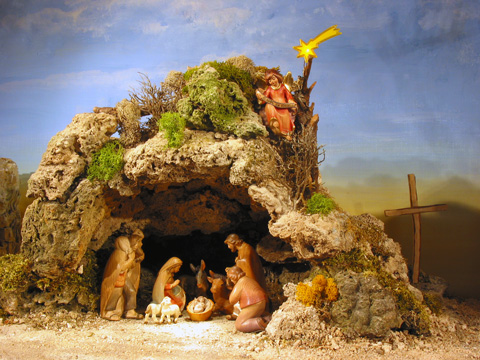
During Christmas time, inside of most of the Catalan homes you are goin to find beautiful Nativity scenes,we call them "Pessebre". Kids love those small figures that we put into the Nativity scenes, and you can find Nativity scenes exhibition in the villages all over Catalonia.

A sample of traditional "Pessebre"

 A Romanic Nativity in Sant James Square, the central square of  Barcelona

Santa Llúcia Christmas Market in front of the Cathedral, you can find all kind of Christmas decoration and Nativity figures

sábado, 19 de noviembre de 2011

LA VALL DE BOÍ

Al Museu Nacional d'Art de Catalunya tenim la col.lecció més important de pintura romànica del món, la majoria d'aquestes obres provenen de les esglèsies de la Vall de Boí, al Pirineu lleidatà, declarades per l'Unesco patrimoni de l'humanitat, la visita d'aquestes esglèsies és una escapada meravellosa al nostre passat i a la nostra essència.


Vistes des del campanar de Sant Joan de Boí

Santa Maria de Taüll

Ermita de Sant Quirc de Durro


Eglèsia de la Nativitat de Durro

Davallament de la Creu de l'esglèsia de Santa Eulàlia d'Erill la Vall

miércoles, 16 de noviembre de 2011

INSIDE BARCELONA CITY HALL

The City Hall of Barcelona was built during the XIV century, is into the Gothic Quarter at Sant James Square. It is still used as City Council, so the Major and the staff are working inside, that is the reason for not being open to the public. I get the opportunity of visit the inside and I would like to share the pictures with you.


Main facade of the City Hall from XIX century


Three views of the City Hall ground floor


First floor


Two views of Saló del Consell de Cent

jueves, 20 de octubre de 2011

EL RATPENAT SIMBOL DE BARCELONA

La llegenda diu que la intervenció d'un ratpenat va evitar una desfeta en la conquesta de València per part de la Corona d'Aragó, i per això el rei Jaume I va popularitzar aquest símbol.
Però sembla que l'explicació més real és que el rat penat sustitueix a la vibra, una mena de drac, que conronava l'escut de varies ciutats mediterràneas.
Fins a principis del segle XX i des de el segle XVII la Ratapinyada ha estat present a l'escut de Barcelona, no se sap per què va desaparèixer aquest element disitintiu i tradicional de l'heràldica de moltes de les ciutats de la mediterrànea .


Detall del Mercat de Sant Antoni amb l'escut de Barcelona popularitzat durant el segle XIX 


 Al Passeig de Gràcia a dalt dels fanals del Pere Falquès s'aprecia la ratapinyada


Llums de la Sala del Consell de Cent a l'ajuntament, la ratapinyada és un important element decoratiu i sombólic.

jueves, 18 de agosto de 2011

BCN DURING AUGUST: GRACIA FESTIVAL

Gracia is a district of Barcelona, it was an independent village until the end of XIX Century. Gracia Avenue, the most elegant avenue in Barcelona, was the old path that linked medieval Barcelona with Gracia.
One of the important events in the city during summer is La Festa Major de Gràcia, a popular and traditional  Festival, a good ocassion for dancing, walking, drinking and tasting Catalan gastronomy and others.
Because the Festival  the neighbors dress the streets in a very spectacular way with all kind of reused materials, as you can see in the pictures bellow.


martes, 16 de agosto de 2011

TEMPLE BUDISTA II: ESTUPA, AMPLIFICADOR DE DESIGS

Al temple Budista del Garraf trobem un element que personalment m'ha fascinat, si més no, penso que és molt curiós, l'Estupa, una aquitectura budista que contè relíquies. És un temple d'origen funerari amb molta simboligía i, segons la religió budista, actua com amplicador de pregàries i desigs.


Una estupa té cinc elements:
  • Una base quadrada
  • Una bóveda hemisfèrica
  • Una punta cónica
  • Una Lluna creixent
  • Un disc circular, el Sol
Cada un dels components s'identifica amb un del cinc elements cósmics:
  • Terra
  • Aigua
  • Foc
  • Aire
  • Eter (o espai).


Visió frontal de l'Estupa a la comunitat budista del Garraf

Contenidor de relíquies, pregàries i desigs


jueves, 4 de agosto de 2011

UN TEMPLE BUDISTE AL PARC NATURAL DEL GARRAF

El Palau Novella es troba al bell mig del Parc Natural del Garraf, va ser edificat a finals del segle XIX per un indià sitgetà, Pere Domènech i Grau, als terrenys de la antiga Masia Novella. El Pere Domènech volia dedicar-se a la producció agrícola, però l'arribada de la fil·loxera a la comarca, el 1893, va frustrar el projecte. Va ser propietat dels agustins durant els anys seixanta, els quals hi van promoure una urbanització.

Façana principal del Palau


 Capilla del Palau

El 1996 s'hi va instal·lar una comunitat budista Sahya Tashi Ling que ha restaurat l'edifici i l'utiliza com a temple.
La visita  de l'interior del Palau Novella fusiona  la tradició catalana amb la filosofía budista, personalment em fascina trobar representacions de budas rodejadas de tota mena de representacions artístiques modernistes.
La comunitat budista Sahya Tashi Ling gestionen l'acollida de tota mena de visitants a l'indret, hi ha botiga, restaurant i visites guiades del Palau (no molt ben resoltes) així com cursos i activitats relacionades amb pràctica del budisme.
Recomano la visita sense prejudicis i oberta de miras, ja que el que trobarem és molt més que un Palau per visitar, es la fusió entre orient i occident.


lunes, 30 de mayo de 2011

EL MOLINO

Fa més d'un any vaig escriure un post sobre el la futura revifada del Paral.lel , en el moment d'escriure aquesta entrada sóc molt feliç, els projectes d'aleshores ja són realitat.

 Façana principal de El Molino

Ahir vaig tenir l'oportunitat de disfrutar de l'espectacle "Made in Paral.lel" al nou El Molino. Artistes i números musicals de molta qualitat a l'escenari, l'orgull de més de 100 anys a dins de la vida dels barcelonins, música en viu, modernitat, bellesa, innovació, traidició, humor... tot això condensat en gaire bé dues hores de revista és "Made in Paral.lel"
La Terremoto de Alcorcón es la vedette d'aquesta nova etapa del Molino, és divertida, autèntica i, el més important, cabaretera. El números més tradicionals i les plomes es fusionen amb d'altres que renoven un gènere autènticament del Paral.lel, la revista. Com a novetat molt interessant per l'audiència femenina dir que hi ha uns fantàstics i guapíssims ballarins que donen el contrapunt perfecte a les Molino's Girls, el Molino Team. Destacar l'actuació del bailaor Amador Rojas que em va emocionar fins al punt de deixar-me sense paraules.
  
Les Molino's Girls  (sento no haver trobat la foto del nois)

L'oferta teatral del Paral.lel amb el Victoria, l'Artèria, l'Apolo, El Molino i la recent compra de l'Arnau per l'ajuntament sembla asegurada de moment.