Mostrando entradas con la etiqueta English. Mostrar todas las entradas

sábado, 7 de abril de 2012

THE MODERNIST HERITAGE IN SITGES: THE SANTIAGO RUSIÑOL COLLECTION

The Cau Ferrat, the modernist palace owned by Santiago Rusiñol in Sitges, is closed, it is under restoration process, but very near from there, in the Miramar building, you can watch some  the most important paintings and other objects from Santiago Rusiñol collection. After the visit of the exhibition you will have done a stroll around this amazing caracter, Santiago Rusiñol, a Catalonian multifaceted artist: painter, writer and collector. I wanted to share with you some of the paintings I love the most. The temporal exhibition will finish the 25th November 2012.

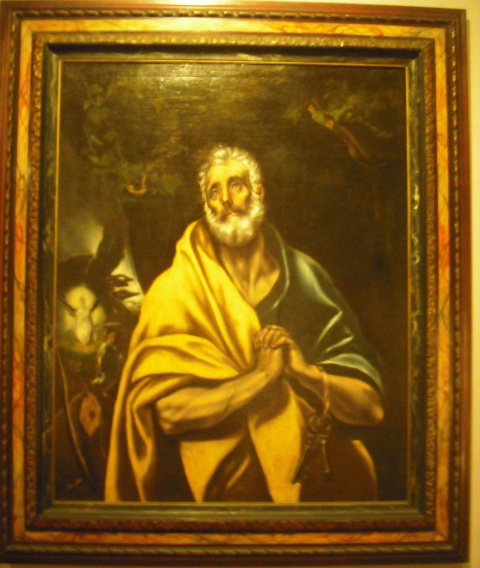
Saint Peter by El Greco, the famous paiter from the XVII century

Saint Magdalena, again El Greco

The morphine by Santiago Rusiñol

The Medal by Santiago Rusiñol

Young lady from Sitges by Santiago Rusiñol

The musicians from the Sitges Band by Santiago Rusiñol


viernes, 6 de abril de 2012

TARRAGONA, THE ANCIENT ROMAN CAPITAL

Tarragona is the capital of one of the four Catalonian provinces, is 100 km far away from Barcelona. The latin name of the city was Tarraco, and Tarraco become the capital of Iberia 2.000 years ago. Iberia was the biggest province of the Roman Empire. The reason of the importance of Tarraco as capital of Iberia is the fact that Emperor August lived in Tarraco during two years because the war againts the astures and cantabros. Strolling around the narrow lanes of the nowadays Tarragona you can find a lot of this glorious roman past.

Roman wall from the III and II century BC with megalithic stones at the bottom, you can compare the lady passing underneath with the size of the stones


The gothic Cathedral has been built on the top of the ancient Roman Temple, the church is consacrated to Saint Tecla and Saint Magi, both Saint's days correspond with the birth of August Emperor 23rd September, and the death of August Emperor 19th August

Corridors underneath of the Roman Circurs for arriving to the spectators seats, the circus had capacity for 30.000 people, and the population of Tarraco was around 40.000 inhabitants

View of the arena of Roman Circus from the I century AC used for horse and chariot races

Very near of the Mediterranean Sea, the Roman Anphitheater site of gladiators fights 

lunes, 26 de marzo de 2012

CALÇOTS, DELICIOUS BARBECUED TENDER ONIONS

During the end of winter and beginning of spring it is possible to taste one of the most tradicional dishes from Tarragona the "calçots", a tender barbecued onion with "romesco" sauce. Those green onions come from Tarragona , but now you can find "calçotades" all over Catalonia.
Last Saturday my family and me went to Renau, Tarragona, for having a "calçotada", the perfect excuse for  having fun and drinking some wine from Priorat county with relatives and friends


The "calçots" before being cooked and the "romesco" sauce


The "calçots" already barbecued


All the people around the table sharing the "calçotada", as you can see, it is not a formal meal


The "calçot" eating process, it is not very clean and sometimes we need bibs 

sábado, 25 de febrero de 2012

CHURCHES IN GIRONA

Girona was founded about  2.000 years ago by romans, during roman period the city was call Gerunda, it was not a very important city, we have not too much information about that moment but we know that Via Augusts lying across the city. During the middle ages Girona become important because the defensive marche of Charlesmagne, and the city became prosperous.

Panoramic view of Girona, from the medieval wall built by Pere el Cerimoniós in the XIV century

Main facade of the cathedral in barroc style

View of the apse of the cathedral, you can see the romanic belltower on the left hand side, the gothic catedral was built over the romanesque one, in the inside we get the biggest unique nave of the gothic period

Sant Feliu Church, inside the tomb of the Saint Patron of Girona, Sant Narcís


Sant Pere de Galligants, amazing church from the romanesque period, inside the Archaelogical Museum of Catalonia

martes, 21 de febrero de 2012

AMPURIES: GREEK AND ROMAN COLONY

Ampuries ruins are a very ancient settlement by the Mediterranean, in the Costa Brava, next to l'Escala a lovely fisherman village  and very near of the Pyrenees, the Catalan natural border with France.

During the VI century B.C.  greek people arrived to Ampuries and founded a colony, Emporion. During the second Punic War, at the beginning of the III century B.C., the roman militars came into Spain by Emporio, and  and they started the romanization of the Iberian Peninsula. In the II century B.C. they founded Emporiae at the north side of the greek colony.

In 1908 the archaeological reseach was started until today, there are still 75% of the settlement pending of excavation, and Ampuries is part of the Archaelogical Museum of Catalonia.


View of the ruins of the greek colony by the mediterranean

The original Asclepius statue found in 1908

Impluviun of a roman house

Roman wall and gate

 
A phallus by the gate, symbol of prosperity and luck


miércoles, 15 de febrero de 2012

THE CRYPT OF THE GÜELL COLONY

Antoni Gaudí designed an incredible church for the Güell Colony, the project of this church can be considered part of the creation process of the Sagrada Familia. The first funicular model was created for the development of this temple for the worker's settlement.
The church is unfinished, they began the building in 1899. In 1915 Mr. Güell's textil company began to lose money and the construction was abandoned when the crypt was completed.


General view of the church, the construction was stopped before finish the main floor

 
Window with  "trencadís", Gaudí's usual mosaic decoration

Stained glass windows, Gaudí was inspired by the bottom side of a pine cone

Please notice that the window is open at the bottom, creating a beautiful colorful cross in the middle

Column and roof of the church

Inside of the Crypt

THE GÜELL COLONY

La Colònia Güell is a textil industrial colony founded in 1890 by Eusebi Güell and developped by Antoni Gaudí and other modernist architects. 
During the Industrial Revolution there were a lot of industrial colonies all over Catalonia, the social conflicts in Barcelona, the control of the industrial owner over the workers and the production process were important reasons for the success of this way of industrialization.
Mr. Güell was a very educated and progressive person, he traveled all over the world, and he lived some years in England, he was in contact with the English industrial colonies. He relocated his textil factory from Barcelona center to Santa Coloma de Cervelló, by the suburs. He wanted to give the best conditions to his workers and  they get all the needs covered into the colony. The Güell Colony was quite privileged if we compare it with other industrial colonies around Catalonia.


 General view of the factory from the Crypt, the church of the colony


The teacher house, it is conected to the boy's school by a catenary arch

Terraced houses for the workers

 The theater and the "Ateneu" leisure areas for the workers by the Joan Güell Square

House of the administrator, he was the link between the neigbours and the insdustrial owner


Doctor's house, next to the administrator's house
martes, 7 de febrero de 2012

ANTONI TAPIES HAS PASSED AWAY

The great painter Antoni Tàpies died yesterday in Barcelona, he was one of my favourite artist, I dedicated two of my post in this blog to him and his Foundation, here you have the links:
Antoni Tàpies Foundation
The Montane Simo Publish House

Also a little of his genius:


 Inside Tàpies Foundation

Chair and Cloud on the top of the Montané Simó Publish House


The controversial sculpture of  a sock

martes, 17 de enero de 2012

MIES VAN DER ROHE PAVILION

The German Pavilion during the Barcelona International Exhibition 1929 was designed by Mies van der Rohe. It was a very important sample of modern achitecture dismanteled at the end of the event in 1930.
The contrast between colors of the marble walls, the use of chrome faced steel columns, the simplicity and purity of lines, are characterisitc of the construction.
In 1986 the reconstruction of the German Pavilion was finished in the original site.


 The open air pond

 The Barcelona Chair was custom-made for the Exhibition


 Georg Kolbe's sculpture

viernes, 16 de diciembre de 2011

THE LADDER OF SCAPE

"The ladder of scape" is the name of a great exhibition of master pieces by Joan Miró in the Miró Foundation. It will be open until 18th March 2012.
The exhibition follows in chronological order different periods in Joan Miró artistic prodution. We can see the creative process of a new language,  Joan Miró invented very personal but clear symbols and he was able to summarize them during his evolution as a painter.
Also after sight of the selected canvas of the exhibition we can verify the artist political commitment  with Spain and his time because the tragic events that took place during XX century.

Also the building of the Miró Foundation by Josep Lluis Sert is a perfect excuse to go and enjoy this Barcelona highligh during Christmas time

 
Sculpture in the garden of the Miró Foundation


sábado, 3 de diciembre de 2011

THE "PESSEBRE", A CATALAN TRADITION

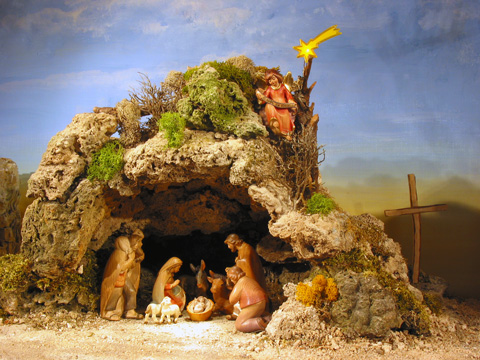
During Christmas time, inside of most of the Catalan homes you are goin to find beautiful Nativity scenes,we call them "Pessebre". Kids love those small figures that we put into the Nativity scenes, and you can find Nativity scenes exhibition in the villages all over Catalonia.

A sample of traditional "Pessebre"

 A Romanic Nativity in Sant James Square, the central square of  Barcelona

Santa Llúcia Christmas Market in front of the Cathedral, you can find all kind of Christmas decoration and Nativity figures