viernes, 6 de abril de 2012

TARRAGONA, THE ANCIENT ROMAN CAPITAL

Tarragona is the capital of one of the four Catalonian provinces, is 100 km far away from Barcelona. The latin name of the city was Tarraco, and Tarraco become the capital of Iberia 2.000 years ago. Iberia was the biggest province of the Roman Empire. The reason of the importance of Tarraco as capital of Iberia is the fact that Emperor August lived in Tarraco during two years because the war againts the astures and cantabros. Strolling around the narrow lanes of the nowadays Tarragona you can find a lot of this glorious roman past.

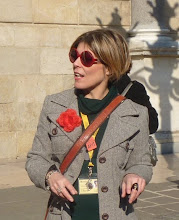
Roman wall from the III and II century BC with megalithic stones at the bottom, you can compare the lady passing underneath with the size of the stones


The gothic Cathedral has been built on the top of the ancient Roman Temple, the church is consacrated to Saint Tecla and Saint Magi, both Saint's days correspond with the birth of August Emperor 23rd September, and the death of August Emperor 19th August

Corridors underneath of the Roman Circurs for arriving to the spectators seats, the circus had capacity for 30.000 people, and the population of Tarraco was around 40.000 inhabitants

View of the arena of Roman Circus from the I century AC used for horse and chariot races

Very near of the Mediterranean Sea, the Roman Anphitheater site of gladiators fights 

lunes, 26 de marzo de 2012

CALÇOTS, DELICIOUS BARBECUED TENDER ONIONS

During the end of winter and beginning of spring it is possible to taste one of the most tradicional dishes from Tarragona the "calçots", a tender barbecued onion with "romesco" sauce. Those green onions come from Tarragona , but now you can find "calçotades" all over Catalonia.
Last Saturday my family and me went to Renau, Tarragona, for having a "calçotada", the perfect excuse for  having fun and drinking some wine from Priorat county with relatives and friends


The "calçots" before being cooked and the "romesco" sauce


The "calçots" already barbecued


All the people around the table sharing the "calçotada", as you can see, it is not a formal meal


The "calçot" eating process, it is not very clean and sometimes we need bibs 

lunes, 12 de marzo de 2012

EL PRIMER TURISME: EL TURISME TERMAL, CALDES DE MALAVELLA

El termalisme és una teràpia molt antiga.  Els grecs, els romans i els àrabs ja la van utilitzar fa molts anys, i ens queden moltes restes arqueológiques que ho demostren.
Durant l'Edat Mitja es va perdre aquest bon constum, i no és fins a mitjans segle XIX que els balnearis tornen a estar de moda, dintre dels corrents higienistes i naturalistes que desenvoluparen la medicina i la cura del cos. En aquest moment, durant la segona meitat del segle XIX, es construeixen balnearis arreu de Catalunya emulant el que està passant a tota Europa.  A Caldes de Malavella en tenim dos, el més conegut és el Balneari Vichy Català, però també està el Balneari Prats

+
Fotos antigues del Baneari Vichy Català a Caldes de Malavella un dels més coneguts arreu

Balneari Vichy Català del 1898, edifici neomudejar de l'arquitecte  modenista Gaietà Buigas


Les estacions de tren eren molt a prop dels balnearis per que així els clients podien arribar amb facilitat, vista de l'estacio des de la façana principal del Balneari Vichy Català


Escultura de Josep Maria Subirachs als jardins del Balneari Vichy Català, encara estic al.lucianda amb aquest mig cos de dona a modus de columna jònica, un exemple perfecte de la cosificació de la dona